芫荽
| Name (CN) | 芫荽 (Yán sui) |
|---|---|
| Synonyms (CN) | 胡荽 莚葛草 莞荽 莚荽菜 香荽 胡菜 原荽 园荽 香菜 |
| Name (EN) | Coriander |
| Scientific name(s) | Herba Coriandr |
| Used section | Whole grass |
| Taste | Spicy |
| Channel Tropism | Induce in the lung meridian and spleen meridian. |
| Cold/Hot properties | Warm |
| Group | Plant [Condiments] |
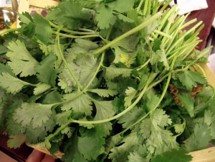
| Origin | Coriandrum sativum L., a genus of coriander in the Umbelliferae family, is used as a medicine for the whole herb and the ripe fruit. |
|---|---|
| Function and treatment | It is used to promote rash penetration and eliminate food and Qi. Treating measles with unpleasant translucency and food stagnation. Relieving sweating and rash, eliminating food and lowering Qi. Curing measles with unpleasant transmissions and food stagnation. |
| Origin and best harvesting period | Originally from the Mediterranean region of Europe, it is said to have been brought back from the West by Zhang Qian in the Western Han Dynasty (1st century B.C.), and is now cultivated in Northeast China, Hebei, Shandong, Anhui, Jiangsu, Zhejiang, Jiangxi, Hunan, Guangdong, Guangxi, Shaanxi, Sichuan, Guizhou, Yunnan, Tibet, Hubei, Henan and other provinces. The whole herb can be picked in spring and summer, cut and dried in the sun. The fruits are picked in summer, removed from impurities and dried in the sun. |